
Pupillary Block Caused by Phakic Intraocular Lens
A 53-year-old man was referred for evaluation following a five-day history of intermittent pressure sensation and vision loss in the left eye. The referring ophthalmologist had initially recorded an intraocular pressure (IOP) of 35 mmHg OS and initiated treatment with oral acetazolamide. Twenty-two years prior, at age 31, the patient had undergone bilateral implantation of angle-supported phakic intraocular lenses (ACIOLs) with superior iridectomies to address high myopia.
Upon examination, best-corrected visual acuity was 0.4 OD and 0.63 OS. IOP had normalised to 10 mmHg OD and 12 mmHg OS with the acetazolamide treatment. Slit-lamp examination revealed a shallow anterior chamber (AC) in the left eye with iris bombé configuration. The iris also showed signs of pigment dispersion. The superior iridectomies performed during the original ACIOL implantation were not visible.
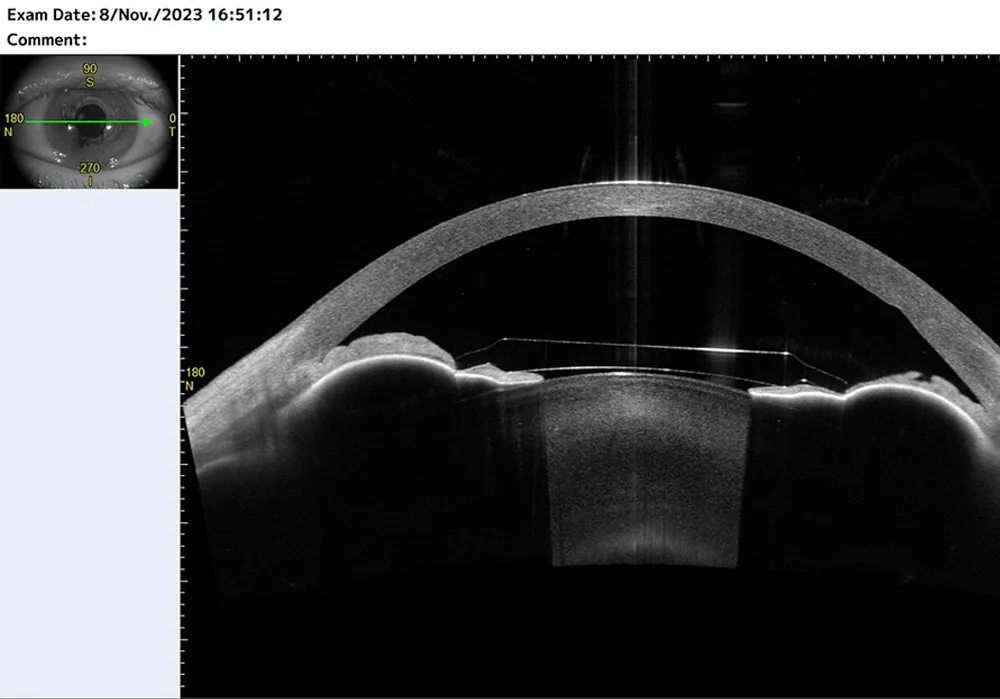
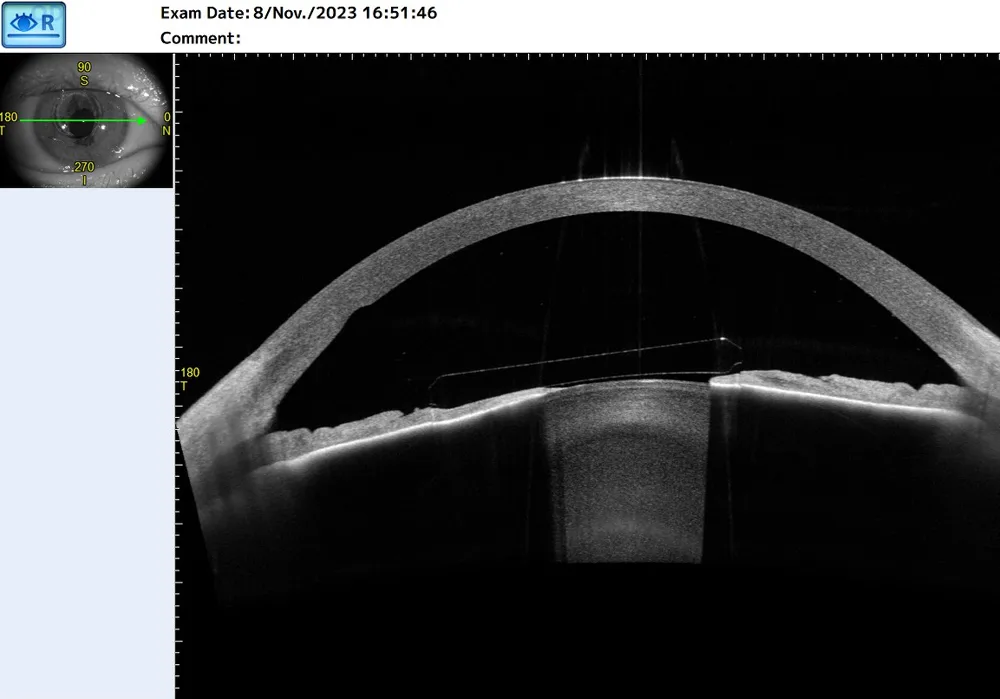
Anterior segment OCT demonstrated angle closure in approximately one-third of the circumference in the left eye, confirming iris bombé in the inferonasal and superotemporal quadrants (Figure 1). The right eye showed an open-angle configuration (Figure 2). The OCT also visualised the ACIOL position and its relationship to the iris. Gonioscopy confirmed these findings.
A fundus examination and optic nerve head OCT revealed borderline glaucomatous changes in both eyes, more pronounced in the left. Based on these findings, surgical intervention was planned. The anterior chamber IOL was explanted through a scleral tunnel approach. This was followed by an uneventful phacoemulsification with implantation of a posterior chamber IOL in the capsular bag.
This case highlights the utility of anterior segment OCT in objectively documenting and quantifying the extent of angle closure in late-onset pupillary block following ACIOL implantation, even in the presence of a surgical iridectomy and normalised IOP after initial treatment. OCT imaging was the ideal means for providing documentation and objective information for treatment planning. The case also underscores the importance of long-term follow-up in patients with ACIOLs.
Further Questions?
Do you have any questions or require further information?
We would be pleased if you send us an inquiry.