
CASIA2 in Cataract Surgery: From Preoperative Planning to Postoperative Confirmation
This case illustrates how CASIA2 can contribute to a high-quality cataract surgery workflow, not only by supporting preoperative assessment and IOL planning, but also by providing objective postoperative confirmation of the anatomical and refractive outcome.
The patient was a 60-year-old male with high myopia in both eyes and visually significant cataracts. Preoperative refraction in the right eye was -8.00 / -2.00 × 15°, with a corrected decimal Snellen visual acuity of 0.32. Slit-lamp examination showed a corticonuclear cataract with a dense posterior subcapsular component. Axial length was 28.18 mm.
In this type of eye, careful preoperative evaluation is particularly important. CASIA2 provided a detailed analysis of the cornea, anterior chamber, crystalline lens, and biometric parameters, helping to confirm the anatomical conditions for surgery and to refine the preoperative planning.
The patient underwent femtosecond laser-assisted cataract surgery (FLACS). A Tecnis PureSee (Johnson & Johnson) ZEN00V +9.00 D intraocular lens was implanted.
Postoperatively, the patient achieved an excellent functional and refractive result, with uncorrected visual acuity of 1.00 and plano refraction. The postoperative analysis confirmed a stable and well-positioned IOL, with minimal tilt and decentration, an expected increase in anterior chamber depth after crystalline lens removal, and stable corneal parameters.
In this case, CASIA2 was not required to solve a complex complication, but rather to support excellence in a routine cataract case. It provided a complete, objective, and visually intuitive documentation of the eye before and after surgery. This type of information is valuable for preoperative planning, postoperative quality control, patient documentation, and clinical confidence.
The final outcome was fully consistent with the surgical plan: excellent uncorrected visual acuity, plano refraction, stable corneal morphology, and a well-centred intraocular lens.
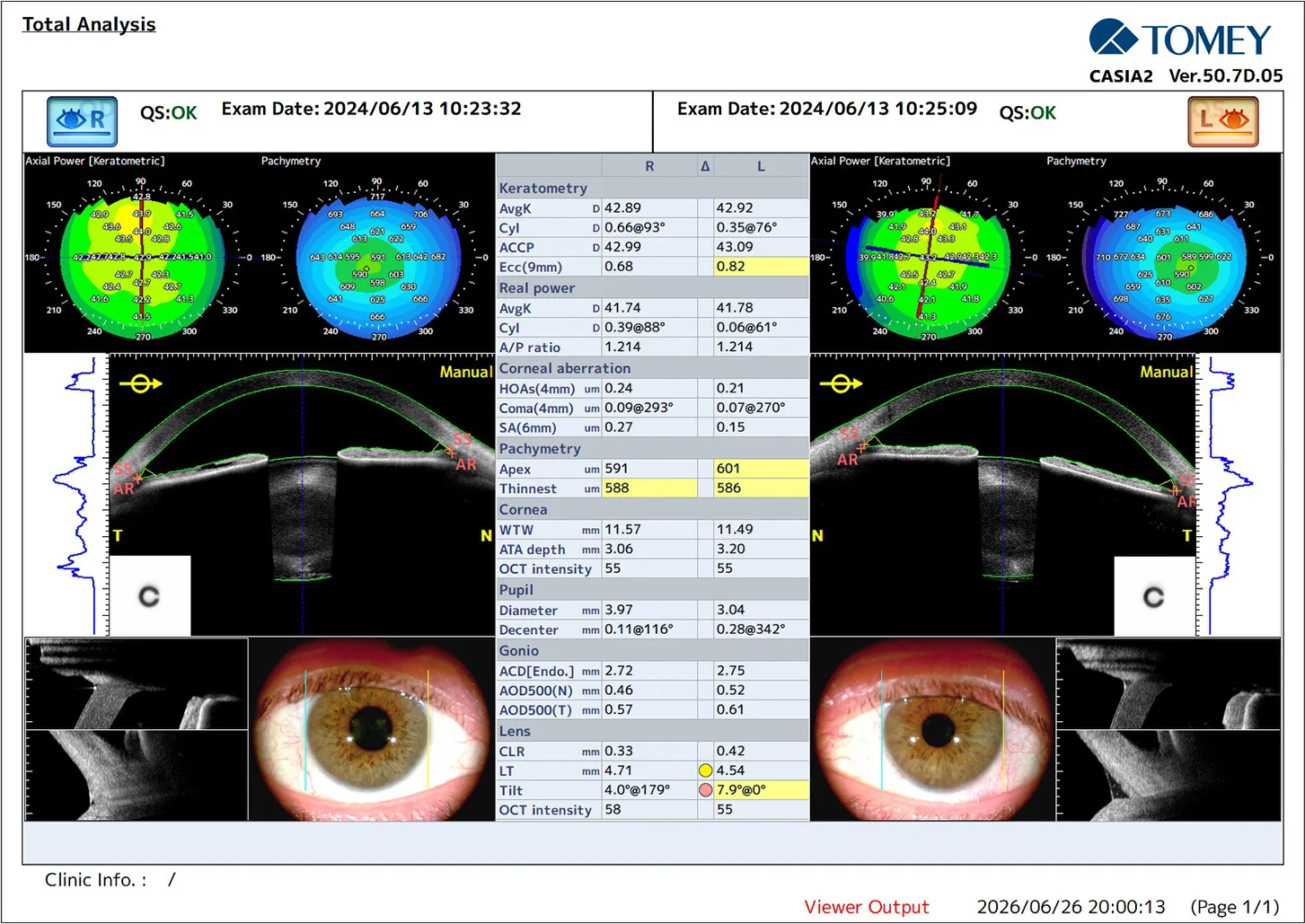
Comprehensive preoperative CASIA2 Total Analysis of the anterior segment. The examination documents corneal morphology, pachymetry, anterior chamber parameters, pupil size, crystalline lens position, lens tilt, and decentration before cataract surgery.
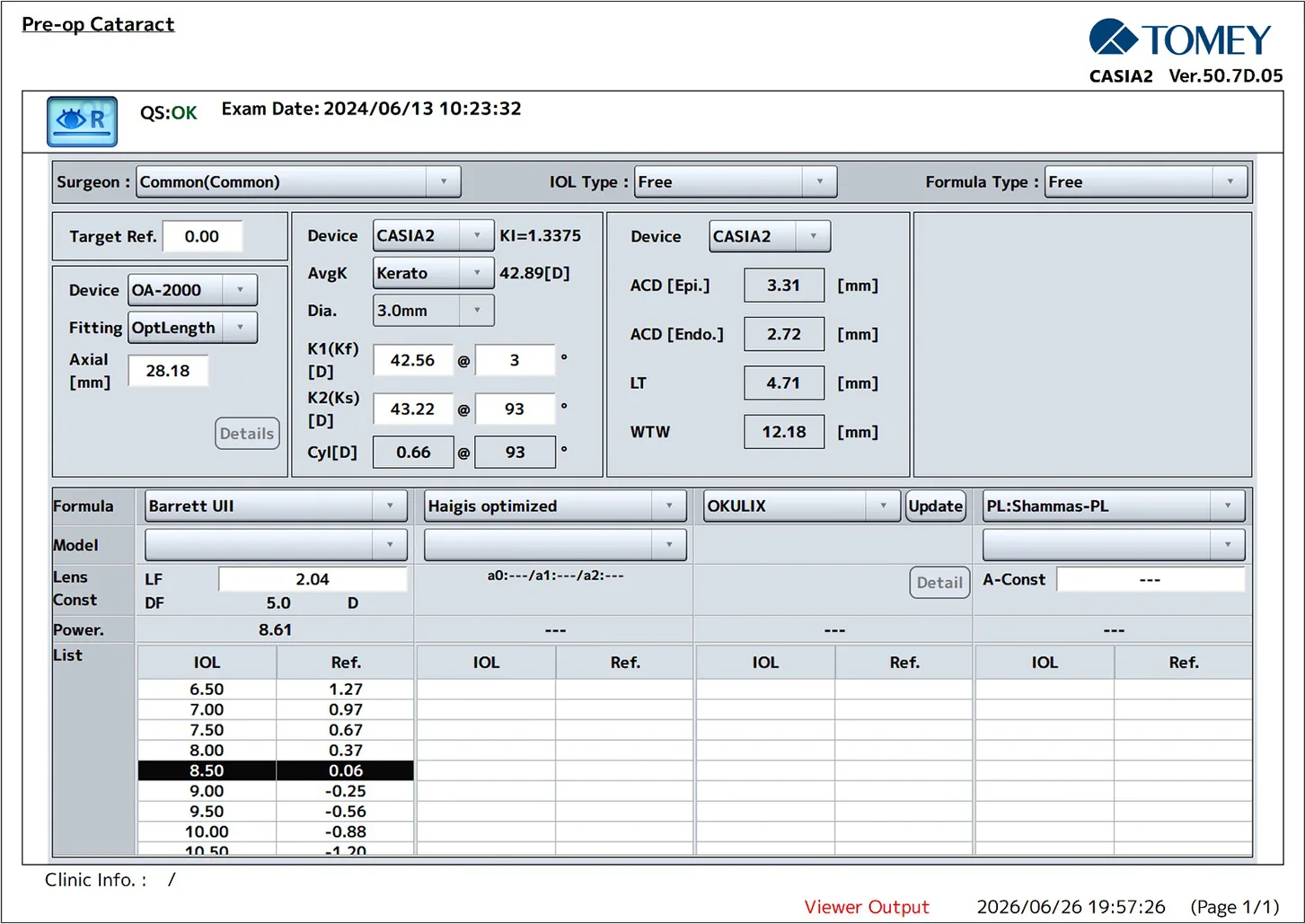
CASIA2 preoperative cataract planning screen showing axial length (data imported from the biometer), anterior chamber depth, lens thickness, white-to-white distance, keratometric data, and IOL calculation. These data supported surgical planning.
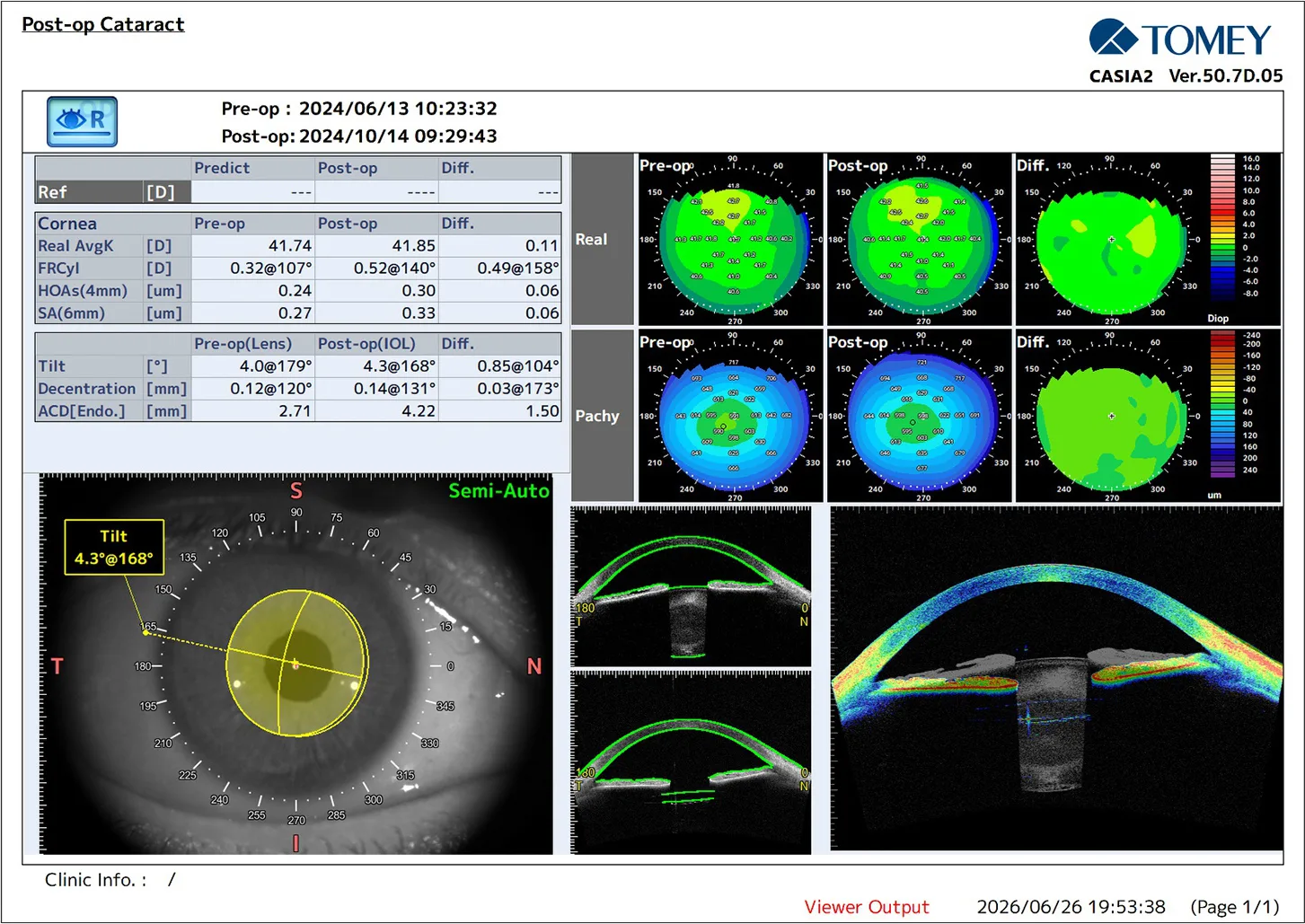
Postoperative CASIA2 cataract analysis comparing the preoperative and postoperative status. The examination confirms the anatomical changes after cataract surgery, including deepening of the anterior chamber and preservation of corneal stability.
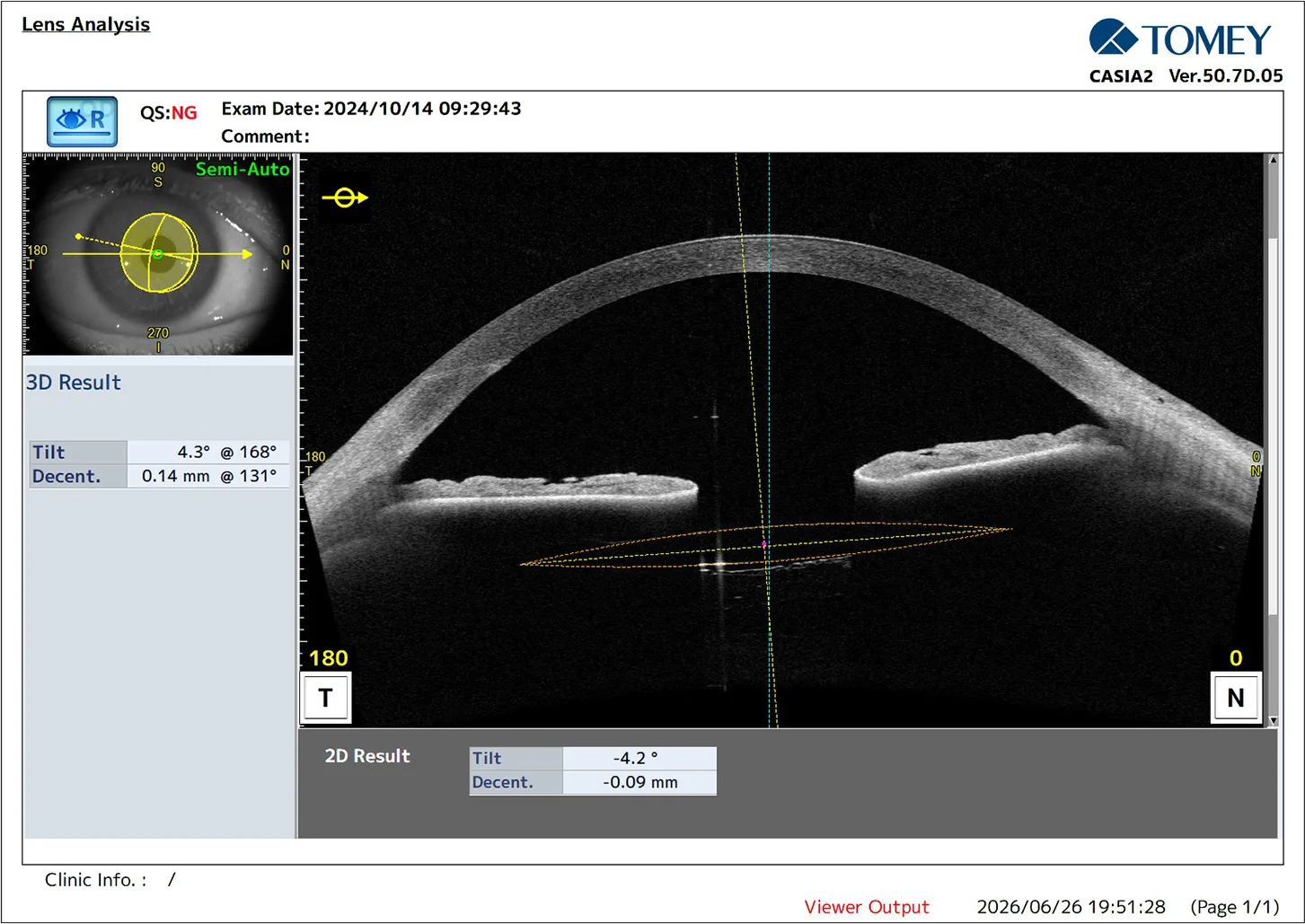
CASIA2 postoperative IOL analysis showing the position of the implanted intraocular lens. The IOL was well positioned, with minimal tilt and decentration, consistent with the excellent refractive and visual outcome. Further information regarding CASIA2-based quantification of crystalline lens and IOL tilt and decentration can be found in: González-López F, Delgado-Tirado S, Pérez-Izquierdo R, González-González D, Medel D, Sáez-Corrales A, Peláez-Gutiérrez EC. Tilt and Decentration of the Crystalline Lens and Intraocular Lens After Femtosecond Laser-Assisted Cataract Surgery. J Cataract Refract Surg. 2026;52(2):140-147. doi:10.1097/j.jcrs.0000000000001770.
Comprehensive preoperative CASIA2 Total Analysis of the anterior segment. The examination documents corneal morphology, pachymetry, anterior chamber parameters, pupil size, crystalline lens position, lens tilt, and decentration before cataract surgery.
1 / 4
CASIA2 preoperative cataract planning screen showing axial length (data imported from the biometer), anterior chamber depth, lens thickness, white-to-white distance, keratometric data, and IOL calculation. These data supported surgical planning.
2 / 4
Postoperative CASIA2 cataract analysis comparing the preoperative and postoperative status. The examination confirms the anatomical changes after cataract surgery, including deepening of the anterior chamber and preservation of corneal stability.
3 / 4
CASIA2 postoperative IOL analysis showing the position of the implanted intraocular lens. The IOL was well positioned, with minimal tilt and decentration, consistent with the excellent refractive and visual outcome. Further information regarding CASIA2-based quantification of crystalline lens and IOL tilt and decentration can be found in: González-López F, Delgado-Tirado S, Pérez-Izquierdo R, González-González D, Medel D, Sáez-Corrales A, Peláez-Gutiérrez EC. Tilt and Decentration of the Crystalline Lens and Intraocular Lens After Femtosecond Laser-Assisted Cataract Surgery. J Cataract Refract Surg. 2026;52(2):140-147. doi:10.1097/j.jcrs.0000000000001770.
4 / 4
Further Questions?
Do you have any questions or require further information?
We would be pleased if you send us an inquiry.