
CASIA2 for Measuring the Ciliary Sulcus in Order to Determine the Size of an Accommodating Intraocular Lens
Introduction
The Lumina accommodating intraocular lens is a dual-optic lens system intended for implantation in the ciliary sulcus. The mechanism of action is based on the Alvarez lens principle. The lens is directly driven by the ciliary muscle, which laterally displaces the two lens components. The performance of the Lumina is directly depending on a perfect fit in the ciliary sulcus and they are therefore custom-made for each eye. Therefore, precise measurement of the sulcus dimensions is crucial for the procedure’s success.
Ultrasound imaging provides poor resolution, even with high-frequency probes, so instead we use the CASIA2 for precise direct measurement of the ciliary sulcus. This is not only more comfortable for the patient but also delivers superior image quality.
Methods
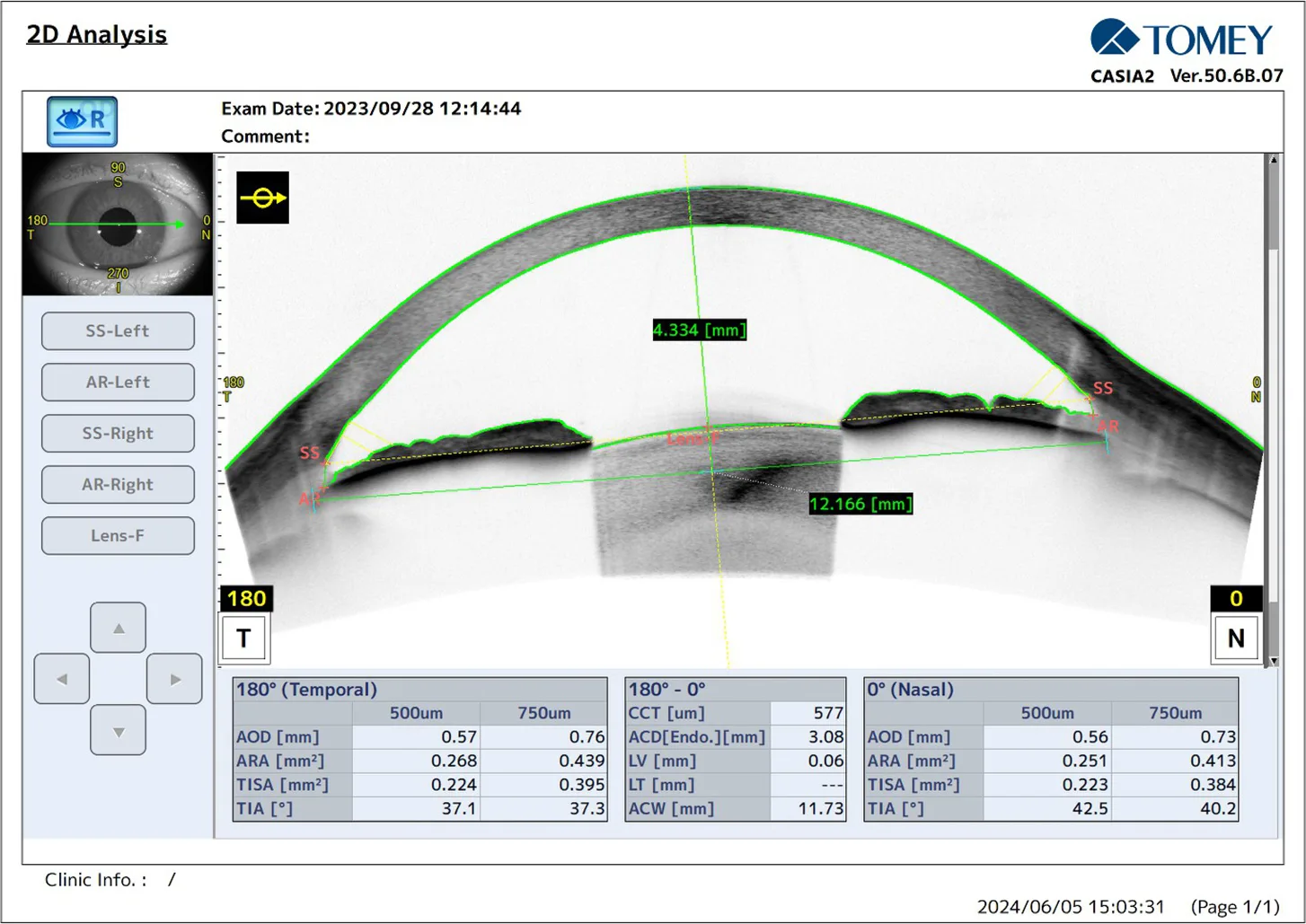
We created a set of Scan Types using up to 64 averaging frames to reduce image noise. This improved the image quality in the ciliary sulcus so that the measurement tool in the 2D Analysis mode can be used to directly measure the width of the ciliary sulcus (Figure 1). It was measured in three different meridians.
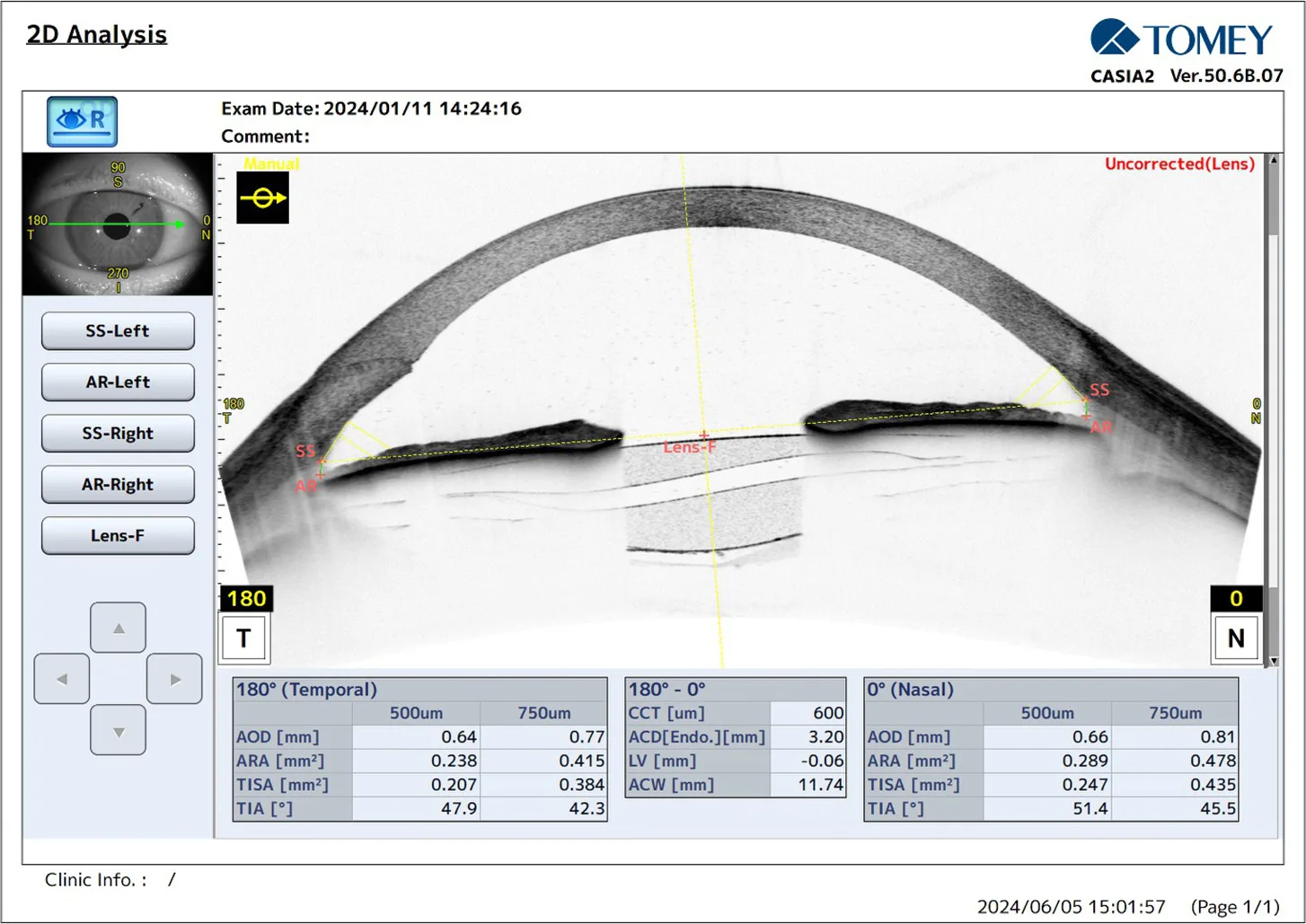
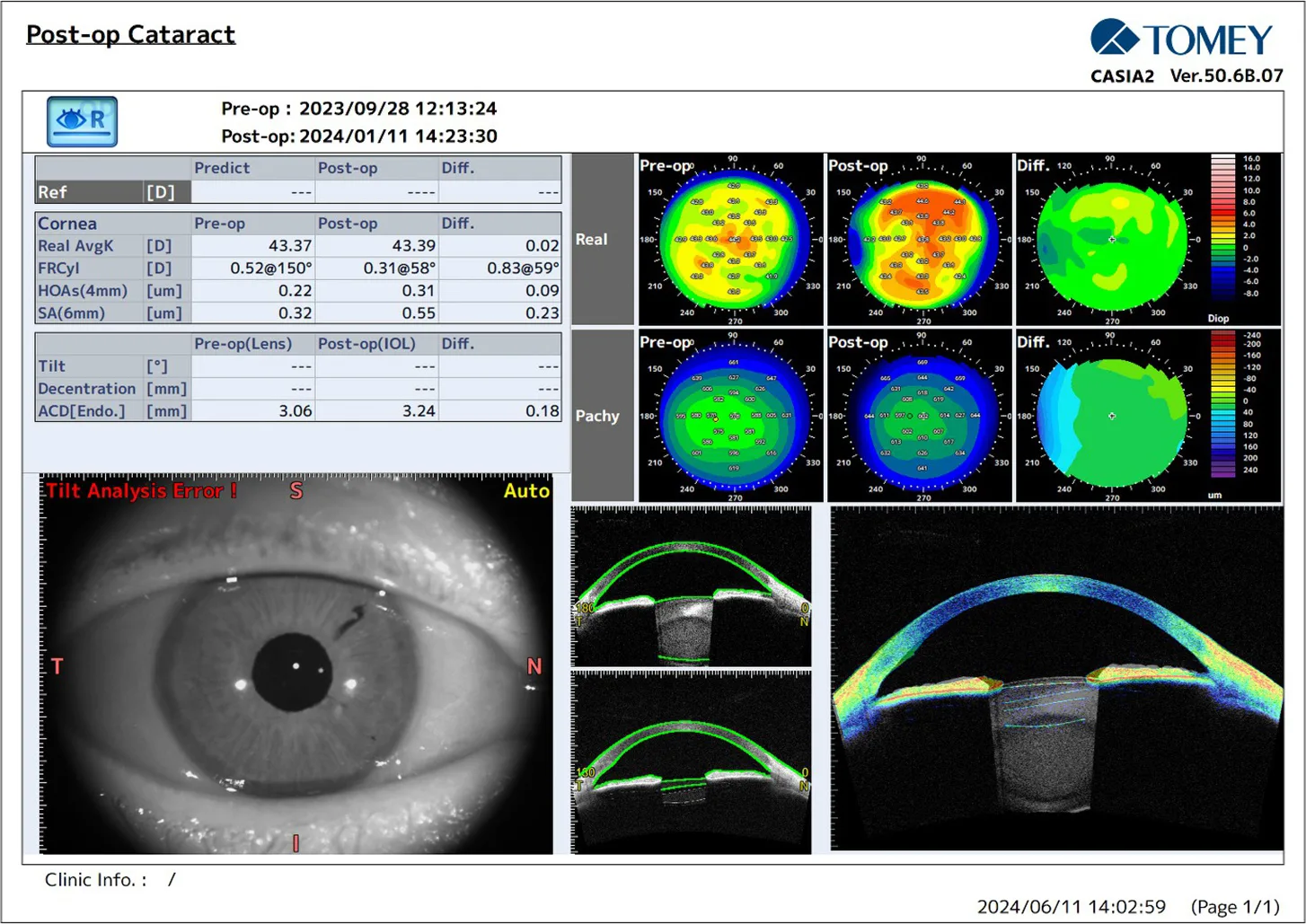
The Lumina is then manufactured using these measurements, and the accurate fit of the lens was assessed postoperatively using the same method; it showed a perfectly placed lens in the ciliary sulcus (Figure 2). The performance of the Lumina was then evaluated by the PowerRef3 (PlusOptix GmbH, Nürnberg). It exhibited an accommodative amplitude of up to 2.5 D with a stimulus of 3 D.
Conclusion
The CASIA2 is the ideal instrument for pre- and postoperative assessment of the ciliary sulcus: It provides superior image quality compared to ultrasound imaging and is also faster and less burdensome to the patients.
Further Questions?
Do you have any questions or require further information?
We would be pleased if you send us an inquiry.